Body Sock Sensory Benefits: Body Sock vs Compression Sheet
Body sock sensory benefits, body sock vs compression sheet differences, best picks, safety rules, and how to use Lycra sensory socks safely.

The DPS Editorial Team
Editorial Team ·
📖 Table of Contents
Affiliate Disclosure: As an Amazon Associate I earn from qualifying purchases. Some links on this page are affiliate links - if you buy through them, we receive a small commission at no extra cost to you. This never influences which products we recommend. Full disclosure policy
Body Sock Sensory Benefits: Complete Guide
Medical disclaimer: Sensory tools are support aids and are not intended to diagnose, treat, cure, or prevent any medical condition, sleep disorder, anxiety disorder, ADHD, or autism. Ask an occupational therapist, pediatrician, or qualified clinician before use when a child is very young, the user cannot exit independently, or there are respiratory, seizure, motor, cardiac, or complex medical concerns.
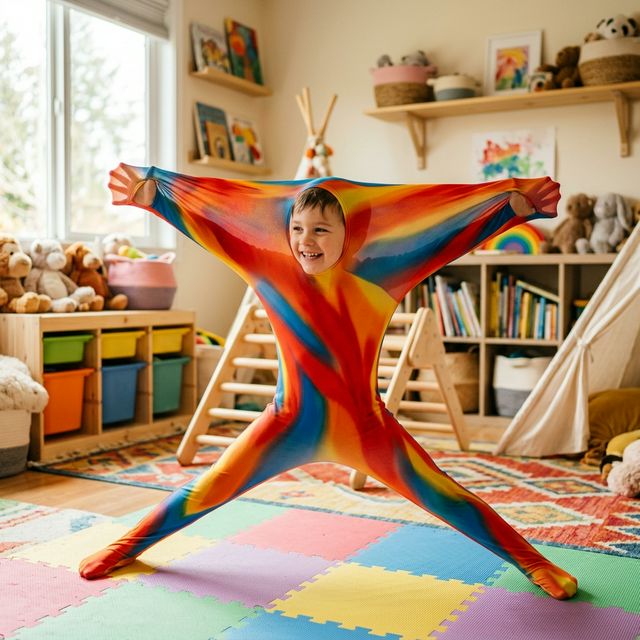
A body sock looks strange if you’ve never seen one. It’s a large, stretchy sack made from Lycra or spandex that a person climbs inside and stretches against from within. The fabric provides resistance in every direction the person moves, creating full-body proprioceptive and deep pressure input simultaneously.
Occupational therapists and families use body socks (also called sensory socks or body pods) with children and adults who seek pressure, resistance, movement, or clear body-boundary feedback. The tool is deceptively simple — a stretchy bag — but the sensory input it provides is rich and multi-layered.
A 2016 meta-analysis in Research and Practice for Persons with Severe Disabilities found that the evidence base for deep touch pressure interventions was limited and did not validate broad school-performance claims (Losinski et al., 2016). Direct evidence on body socks as a standalone product is limited, so they are best described as sensory comfort and regulation supports rather than medical treatments.
TL;DR: Body socks are stretchy, full-body sacks made from Lycra or spandex-blend fabric that provide proprioceptive resistance, gentle compression, and body-boundary feedback. Compared with compression sheets, body socks are active daytime tools; compression sheets are passive sleep tools. Use body socks for short supervised sessions, and make sure the user can exit independently.
What Is a Body Sock?
A body sock is a large, envelope-shaped pouch made from stretchy fabric (typically Lycra, nylon-spandex blend, or similar 4-way stretch material). The user steps or climbs inside, and the fabric stretches around their entire body from feet to shoulders (or head, in some designs).
How it works
When the person inside pushes, stretches, reaches, or moves in any direction, the fabric resists. This resistance:
- Engages muscles against force — every movement requires the user to push against elastic resistance, activating proprioceptors in muscles, tendons, and joints
- Provides circumferential compression — the elastic fabric naturally springs back, squeezing gently around the body
- Creates spatial boundaries — the fabric defines the body’s edges, enhancing body awareness (knowing where your body begins and ends in space)
- Demands motor planning — moving purposefully inside a body sock requires the brain to coordinate complex motor sequences
This combination of proprioceptive resistance, gentle compression, and body-boundary feedback makes the body sock a useful active sensory tool for people who regulate through movement.
For the science behind proprioception and deep pressure, see our science of deep pressure stimulation guide.
Sensory Benefits of Body Socks
1. Proprioceptive input (body awareness)
The primary benefit. Every movement inside a body sock requires pushing against resistance, which floods the proprioceptive system with data. For individuals whose proprioceptive processing is inefficient (common in autism, ADHD, and SPD), this concentrated input helps the brain build a more accurate map of where the body is and what it’s doing.
Observable results: Improved coordination, reduced clumsiness, better sense of personal space, more controlled movement.
2. Deep pressure stimulation (calming)
The elastic fabric provides constant, gentle compression against the skin and underlying tissues. Sensory models associate this kind of firm, predictable pressure with the autonomic nervous system’s calming response, though individual response varies.
Observable results: Some users appear calmer, breathe more steadily, or show less restless movement after a short session.
3. Motor planning (praxis)
Moving purposefully inside a body sock requires the brain to plan, sequence, and execute movements against an unfamiliar resistance. This strengthens motor planning pathways — the ability to conceive of an action, organize the steps, and carry them out.
Observable results: Improved ability to follow multi-step instructions, better coordination in novel tasks, increased confidence in physical activities.
4. Spatial awareness (vestibular-proprioceptive integration)
The fabric boundary gives the brain clear feedback about the body’s edges and position in space. For individuals who struggle with spatial awareness (walking into doorframes, difficulty judging distances, poor sense of body size), this defined boundary is like giving the brain a clearer map.
Observable results: Better navigation of physical spaces, reduced collision with objects, improved understanding of body position during rest and movement.
5. Emotional regulation
The combination of deep pressure + proprioceptive input + the enclosed, cocoon-like environment creates a multi-sensory calming experience. Many children describe being inside a body sock as feeling “safe” or “cozy.” The fabric creates a defined, predictable sensory environment that reduces the overwhelm of open, unpredictable spaces.
Observable results: Reduced meltdown frequency, faster recovery from sensory overload, improved emotional transitions.
Citation Capsule: Body socks provide four types of sensory input: proprioceptive resistance, gentle compression, spatial boundary awareness, and motor planning challenge. Losinski et al. (2016) reviewed deep touch pressure supports and found limited evidence for broad performance claims, so body socks should still be treated as sensory comfort tools rather than medical treatments.
Best Body Socks
Fun and Function Sensory Body Sock
Compare Fun and Function sensory body socks on Amazon
Fun and Function is a leading OT-focused brand, and their body sock is the industry standard. Strong, stretchy Lycra with reinforced seams. Available in multiple sizes from small child to adult. The fabric is thick enough to resist without tearing but thin enough to breathe.
- Material: Lycra (nylon-spandex blend)
- Sizes: Child S, M, L; Youth; Adult S, M, L
- Opening: Side entry with snap closure
- Durability: Reinforced double-stitched seams
- Price: ~$35-55 depending on size
Harkla Sensory Body Sock
Compare Harkla sensory body socks on Amazon
Designed by an occupational therapist, the Harkla body sock uses a durable blend that balances stretch with resistance. The side opening with Velcro closure makes entry and exit easy for children. Machine washable.
- Material: Stretchy nylon-spandex blend
- Sizes: Child S, M, L; Adult S, M
- Opening: Side entry with Velcro
- Durability: Double-stitched, machine washable
- Price: ~$30-45
For a broader overview of body sock options, see our body socks sensory guide.
SENSORY4U Body Sock
Compare SENSORY4U body socks on Amazon
A budget-friendly option that performs well for the price. The fabric is slightly thinner than the Fun and Function or Harkla, which means less resistance but also more breathability. Good entry point for families trying a body sock for the first time.
- Material: Lycra blend
- Sizes: Child S, M, L; Adult M, L
- Opening: Top entry
- Durability: Single-stitched seams (less durable than premium options)
- Price: ~$20-30
How to Use a Body Sock
Getting in
The user steps into the body sock through the opening (side or top, depending on design). Pull the fabric up over the body until it reaches the shoulders. Arms go inside. Some body socks cover the head with a see-through panel; others stop at the shoulders.
Activities inside the body sock
The real benefits come from purposeful movement inside the sock:
Stretching and pushing: Push arms and legs outward against the fabric resistance. Reach as far as possible in every direction. This provides maximum proprioceptive input.
Walking and moving: Walk around the room inside the body sock. The resistance against every step and arm swing requires motor planning and provides constant proprioceptive feedback.
Yoga-style poses: Practice warrior pose, tree pose, or downward dog inside the body sock. The resistance adds a proprioceptive challenge to familiar positions.
Rolling and tumbling: On a soft surface, roll, tumble, and curl into different shapes inside the body sock. The fabric maintains compression throughout.
Stillness: Simply standing or sitting inside the body sock provides passive compression. For calming purposes, stillness inside the sock is effective — no movement required.
Session duration
- Ages 3-5: 5-10 minutes per session
- Ages 6-12: 10-20 minutes per session
- Teens and adults: 15-30 minutes per session
- Breaks: Take the body sock off between sessions. Continuous wear reduces the novelty and effectiveness.
Supervision guidelines
- Ages 3-5: Always supervised. The child must be able to exit the body sock independently.
- Ages 6-12: Supervised initially; independent use once comfortable
- Teens and adults: Independent use is fine
Safety rules
- The user must always be able to exit independently
- The opening should never be sealed or tied shut
- Use on a padded or carpeted surface (the body sock can affect balance)
- Stop if the user shows signs of overheating, panic, or distress
- Check fabric regularly for tears that could become entanglement hazards
Body Sock vs. Compression Sheet
Body socks and compression sheets can look similar on paper because both use stretchy Lycra or spandex-blend fabric. In practice, they solve different problems.
| Feature | Body sock | Compression sheet |
|---|---|---|
| Primary use | Active daytime regulation | Passive sleep or bedtime pressure |
| Sensory feel | Resistance-based pressure from pushing into fabric | Gentle circumferential wrap around the sleeper |
| Best setting | Sensory room, therapy room, bedroom floor, supervised movement break | Bed, bedtime routine, quiet rest |
| Typical duration | 5 to 30 minute sessions | Overnight or rest periods, if safe and tolerated |
| User role | Active: the user creates pressure by moving | Passive: the sheet provides steady fabric tension |
| Best for | Movement seekers, body-awareness work, active proprioceptive input | Sleepers who dislike blanket weight but like snug pressure |
| Watch-outs | Balance, overheating, face coverage, exit independence | Entrapment, overheating, breathing/mobility limits, child sleep safety |
| Shopping path | Compare sensory body socks | Compare sensory compression sheets |
Choose a body sock when the user needs to move, push, crawl, stretch, or reset during the day. Choose a compression sheet when the goal is a snug bedding feel and the user can reposition, exit, and communicate discomfort during sleep.
For sleep-specific options, read our best compression sheets guide.
Body Socks vs. Other Sensory Tools
| Feature | Body Sock | Weighted Blanket | Compression Vest |
|---|---|---|---|
| Input type | Proprioceptive + compression + spatial | Deep pressure (gravitational) | Compression (circumferential) |
| Active vs. passive | Active (requires movement) | Passive (lies on you) | Passive (worn) |
| Portability | Moderate (rolls up small) | Low (heavy) | High (worn under clothes) |
| Best for regulation | Sensory seekers who need to move | Calming during rest | All-day background input |
| Duration | 10-30 minute sessions | Hours (including sleep) | Hours (with breaks) |
| Cost | $20-55 | $40-250 | $25-100 |
Body socks are best for active regulation — when the person needs to move, push, and engage physically to feel organized. Weighted blankets are best for passive regulation — when the person needs to be still and let the weight do the work. Compression vests are best for sustained background input — worn during planned parts of the day with breaks.
For a complete approach, combine body sock sessions with a weighted blanket at night and compression clothing during the day.
Citation Capsule: Body socks combine active proprioceptive resistance with gentle compression, making them a logical option for sensory seekers who regulate best through movement. Use short sessions with breaks between. Always ensure the user can exit independently.
Body Socks for Adults
Body socks aren’t just for kids. Adults with autism, SPD, ADHD, and anxiety use body socks for sensory regulation, though the practice is less well-known.
Why adults hesitate: Let’s be direct — climbing into a stretchy sack feels unusual as an adult. The tool is visually associated with children’s therapy. Many adults who would benefit from body socks never try them because of this perception.
Why adults should try them: The proprioceptive system doesn’t care about social perceptions. If you’re an adult who craves deep pressure, seeks resistance-based input, or finds compression garments calming, a body sock provides more intense and comprehensive input than almost any other single tool.
Where to use them: At home, in a private space. Body socks are a home tool for adults. Use them as part of a morning regulation routine, during evening wind-down, or during moments of high anxiety or sensory overload.
Many adults who use body socks describe them as “a weighted blanket you can move inside.” That’s a useful way to think about it. If you like the compression of a weighted blanket but find lying still frustrating, a body sock gives pressure while allowing — even requiring — movement.
For more on how adults use deep pressure tools, see our deep pressure therapy for autistic adults guide.
Frequently Asked Questions
What age can a child use a body sock?
Most body socks are rated for ages 3 and up. The child must be able to get in and out of the body sock independently. For children under 3, direct supervision is essential, and many OTs recommend waiting until the child can follow basic safety instructions. Always check the manufacturer’s age recommendation for the specific product.
How long should a body sock session last?
For children, 10-20 minutes is typical. For adults, 15-30 minutes. The goal is to provide concentrated sensory input, not extended wear. Most OTs recommend 2-3 sessions per day with breaks between. If the person is using the body sock for calming during a meltdown or high-anxiety moment, the session ends when they feel regulated — which might be 5 minutes or 25 minutes.
Can body socks help with autism meltdowns?
Yes, when used proactively. Entering a body sock during the early stages of sensory overload (before a full meltdown) can provide enough proprioceptive and deep pressure input to help the nervous system regulate. During a full meltdown, the person may resist entering the body sock. The best strategy is teaching the individual to recognize their early warning signs and go to the body sock before they reach crisis point.
Do body socks work for ADHD?
Body socks are particularly effective for ADHD because they require active engagement. The ADHD brain needs stimulation to focus and regulate. A body sock provides that stimulation through resistance, compression, and motor planning challenges. Many adults with ADHD use body sock sessions as a “reset” between focused work blocks.
How do I choose the right size body sock?
Size the body sock based on the user’s height, not weight. The sock should be long enough to cover from feet to shoulders with some fabric to spare. Too small and it restricts movement uncomfortably; too large and it doesn’t provide enough resistance. Most manufacturers provide height-based sizing charts. When in doubt, size up — a slightly larger body sock still provides resistance but allows more freedom of movement.
Is a body sock better than a compression sheet?
Neither is universally better. A body sock is better for active daytime movement, proprioceptive resistance, and supervised sensory breaks. A compression sheet is better for people who want snug bedding pressure while resting or sleeping and can use it safely. Many families use body socks during the day and compression bedding only if nighttime pressure is the main need.
Frequently Asked Questions
What age can a child use a body sock?
Most are rated for ages 3+. The child must be able to enter and exit independently. For children under 3, direct supervision is essential. Check the manufacturer's specific age recommendation.
How long should a body sock session last?
10-20 minutes for children, 15-30 minutes for adults. 2-3 sessions per day with breaks between. The session ends when the person feels regulated — that might be 5 minutes or 25 minutes.
Can body socks help with autism meltdowns?
Yes, when used proactively during early overload signs. During a full meltdown, the person may resist. The best strategy is teaching early warning recognition and using the body sock before reaching crisis.
Do body socks work for ADHD?
Very well. Body socks require active engagement — resistance, compression, and motor planning — which provides the stimulation the ADHD brain needs. Many adults use sessions as a 'reset' between work blocks.
How do I choose the right size body sock?
Size by height, not weight. The sock should cover feet to shoulders with some spare fabric. Too small restricts movement; too large reduces resistance. When in doubt, size up for more freedom of movement.
Is a body sock better than a compression sheet?
Neither is universally better. Body socks are active daytime tools for movement and proprioceptive resistance. Compression sheets are passive bedding tools for snug sleep pressure. Choose by use case and safety.
The DPS Editorial Team
Editorial Team
The DeepPressureStimulation.com Editorial Team researches and writes about deep pressure stimulation, weighted blankets, and sensory tools. All content is based on peer-reviewed research, published clinical guidelines, and reputable health sources. Always consult a qualified healthcare provider before starting any new therapy.
Stay Informed, Stay Calm
Get science-backed articles on deep pressure therapy, weighted blankets, and sensory tools delivered to your inbox. No spam — just calm.
📬 No spam, ever. Unsubscribe anytime.